Author: chesilly

  • How to Apply for Domestic Worker Visa UK: Complete Step-by-Step Guide

    How to Apply for Domestic Worker Visa UK: Complete Step-by-Step Guide

    UK Domestic Worker Visa 2026: Why Most Applications Fail (And What to Do Instead)

    If you’re researching the domestic worker visa UK, you’re likely considering sponsoring a Filipino nanny, housekeeper, or domestic helper to work in your home.With over 1,940 monthly searches for domestic visa UK-related terms, hundreds of UK families explore this option every month.

    Here’s what we’ve learned from working with families over the years: The domestic helper visa UK process has become significantly more challenging since 2020, with tighter immigration controls making successful sponsorship increasingly difficult and expensive.

    This guide provides honest, realistic information about the domestic worker visa process—including why most families ultimately choose a different path that’s faster, more cost-effective, and far less risky.

    Understanding the Domestic Worker Visa Landscape in 2026

    The domestic worker visa allows overseas nationals to work in private UK households in roles such as nannies, housekeepers, and general domestic assistants.While this sounds straightforward, the reality of bringing someone from the Philippines (or any country) to the UK has changed dramatically in recent years.


    The Current Reality:

    Immigration controls have tightened significantly since Brexit and the post-pandemic period. What was once a manageable process has become a complex,lengthy, and expensive undertaking with no guarantee of success—even for well-prepared applications.


    Key Visa Categories:

    The main pathway for bringing domestic workers to the UK falls under specific visa categories that require either:

    • The Domestic Worker in a Private Household visa (for workers accompanying employers from overseas)
    • Skilled Worker visa sponsorship (requires employer to have a sponsor license—cost £536-£1,476 just for the license)
    • Other immigration routes with substantial financial and legal requirements

    The Challenge: Most families don’t qualify as licensed sponsors, and the alternative routes have become increasingly restricted.

    Why Private Households Usually Can’t Sponsor Domestic Workers

    To legally sponsor a domestic worker under the Skilled Worker visa, employers must hold a valid sponsor license issued by the Home Office. This license requires:

    • A registered UK business or organization with a physical office
    • Established HR and compliance systems
    • A history of lawful trading and employment
    • Ability to meet ongoing reporting and audit requirements

    Most private households do not meet these criteria. The sponsor license system is primarily designed for businesses, not individual families.

    This means that unless you operate a registered business or have access to a licensed sponsor, sponsoring a domestic worker yourself is often not legally possible.

    The True Cost and Complexity of Sponsoring a Domestic Worker

    When families ask us about sponsoring a domestic worker visa, we’re transparent about what this really involves—both financially and emotionally.

    Direct Financial Costs:

    • Sponsor license application: £536-£1,476 (one-time fee, but only valid if you qualify)
    • Certificate of Sponsorship: £199 per worker
    • Visa application fee: £625-£1,423 per year
    • Immigration Health Surcharge: £624 per year of visa
    • Immigration legal fees: £3,000-£8,000 (essential for complex applications)
    • English language tests: £150-£200
    • TB testing and medical exams: £200-£400
    • Document translation and certification: £100-£500
    • Travel costs: £600-£1,200

    Total estimated cost: £6,000-£13,000 for the first year alone—and that’s assuming everything goes smoothly.

    Hidden Costs:

    • Time investment: 4-8 months minimum from start to arrival (often longer)
    • Salary requirements: Must pay at least £38,700 annually (for Skilled Worker visa route) or prove household income thresholds
    • Ongoing compliance: Annual reporting, right-to-work checks, visa renewals
    • Risk of rejection: If denied, you lose most fees with no refund
    • No guarantee of fit: Even if visa succeeds, the candidate may not work out in your home

    The Reality Check: We regularly speak with families who’ve spent £8,000-£15,000 and 6-12 months trying to sponsor someone, only to have the visa rejected or the placement fail within months.

    The Hidden Risk: When Candidates Disappear After Arrival

    Another harsh reality many families face is that even if the visa is successfully granted and the candidate arrives in the UK, there is a significant risk that the domestic worker will leave the placement soon after arrival.

    For many Filipino domestic workers, coming to the UK is seen as a “golden ticket” to better opportunities. Some workers:

    • Decide to leave their sponsored employer to seek higher-paying or less demanding jobs
    • Move to different cities or sectors, such as hospitality or care work
    • Return home early due to homesickness or cultural adjustment difficulties

    This “runner” risk means families can lose their substantial investment in visa sponsorship and relocation costs without receiving the expected help.

    Unfortunately, this is a common story we hear from families who come to us after failed sponsorship attempts.

    Why Most Domestic Worker Visa Applications Struggle

    Based on feedback from families who come to us after failed sponsorship attempts, here are the most common barriers:


    1. Sponsor License Requirements

    To legally sponsor a domestic worker, most families need a sponsor license. The Home Office scrutinizes these applications heavily, and many families simply don’t meet the criteria:

    • Must demonstrate genuine need for full-time domestic worker
    • Must prove financial capability to sponsor
    • Must have HR systems and compliance processes in place
    • Must pass Home Office compliance checks

    Reality: Private households rarely qualify for sponsor licenses, as these are primarily designed for businesses and organizations.


    2. Salary and Financial Thresholds

    The Skilled Worker visa route requires proving you’ll pay at least £38,700 annually (as of 2026) for many roles. For domestic workers, even if lower thresholds apply, you must demonstrate:

    • Consistent ability to pay the salary
    • Six months of financial statements
    • Proof of accommodation provision
    • Evidence you can support the worker financially

    Reality: The financial burden extends beyond just salary—it’s the cumulative cost of visa fees, legal costs, and ongoing compliance.


    3. Processing Times and Uncertainty

    Even perfectly prepared applications face:

    • 3-8 months processing time for initial visa decisions
    • Additional delays for complex cases or requests for more evidence
    • No guarantee of approval despite meeting stated requirements
    • Policy changes that can affect applications mid-process

    Reality: Families need childcare or household help NOW, not potentially in 8+ months.


    4. The “Success” That Still Fails

    Here’s what many families don’t realize: Even when the visa is approved, there’s significant risk the placement won’t work out.

    We see this pattern repeatedly:

    • Family spends £10,000+ and 8 months to bring someone over
    • Cultural adjustment issues arise
    • Working relationship isn’t what either party expected
    • Candidate decides to leave or family realizes it’s not the right fit
    • Family is back to square one—but now £10,000 poorer and still without help

    Reality: You can’t truly know if someone will fit your household until they’re living and working with you. That’s an expensive gamble when you’ve invested this much in sponsorship.

    The Smarter Alternative: Filipino Nannies Already in the UK

    After years of watching families struggle with domestic worker visa sponsorship, we’ve seen a clear pattern: The families who succeed in finding great household help are those who hire candidates already in the UK.

    Here’s why this approach makes more sense for most families:


    Immediate Availability

    • Start date in 2-4 weeks instead of 6-12 months
    • No waiting for visa processing
    • No immigration uncertainty
    • Immediate relief for your household needs

    No Visa Costs or Risks

    • Save £6,000-£13,000 in sponsorship and legal fees
    • No sponsor license requirements
    • No annual visa renewal costs
    • No immigration compliance burden
    • Our placement fee is a fraction of visa sponsorship costs

    Trial Period and Guarantees

    • Interview candidates in person or via video call
    • Meet them before commitment
    • Trial period to ensure good fit
    • Our 3-month guarantee: Free replacement if placement doesn’t work out
    • Much lower financial risk

    Proven Track Record

    Our Filipino nannies already in the UK have:

    • Established right to work in the UK (we verify this)
    • DBS checks completed
    • UK work experience and references
    • Understanding of UK household expectations
    • Cultural adjustment already completed
    • Good English communication skills

    Why Filipino Nannies Are Your Best All-in-One Solution

    Whether you initially searched for a domestic worker visa or a nanny specifically, here’s what makes Filipino nannies the ideal choice for UK families:


    True Versatility

    Unlike hiring separate staff for different roles, one Filipino nanny typically handles:

    • Childcare: Full nanny duties, school runs, activities, homework help
    • Housekeeping: General cleaning, laundry, ironing, organization
    • Cooking: Meal preparation for children and family
    • Pet care: Walking, feeding, basic pet care

    Cost-Effectiveness

    Instead of employing:

    • Nanny: £550-650/week
    • Housekeeper: £12-15/hour (20 hours = £240-300/week)
    • Cook: £15-18/hour (10 hours = £150-180/week)

    Total: £940-£1,130/week for three separate people

    You employ one versatile Filipino nanny for £550-800/week (live-in, Monday-Saturday) who covers all these responsibilities.


    Travel Flexibility
    Filipino nannies can travel abroad with your family for holidays, making family trips stress-free. No need to:

    • Find temporary childcare while traveling
    • Worry about children’s routines being disrupted
    • Manage household coordination from abroad

    Long Working Hours Without Complaints
    Filipino nannies are typically happy to work 10-12 hour days (with appropriate breaks) and adapt to your family’s schedule. This flexibility is invaluable for working parents with demanding careers.

    How The House of Yaya Makes This Easy

    Our bespoke service handles everything families struggle with when trying to DIY their domestic staffing:


    Candidate Sourcing

    • Large community of qualified Filipino nannies across UK and UAE
    • Pre-vetted candidates with verified experience
    • Can find suitable candidates in days (though we recommend 2-month timeline for best matches)

    Thorough Vetting

    • Right to work in UK verification (we handle this legal requirement)
    • DBS checks on chosen candidates
    • Reference verification
    • Initial screening and interviews
    • Skills assessment

    Matching and Selection

    • Understanding your specific household needs
    • Shortlist of 3-5 suitable candidates
    • Arrange interviews (in-person or video)
    • Trial periods to ensure good fit
    • Your final decision on which candidate to hire

    Ongoing Support

    Unlike visa sponsorship where you’re on your own once the visa is approved, we provide:

    • 24/7 support throughout the entire working relationship
    • Conflict mediation if issues arise
    • Assistance with any employment questions
    • 3-month guarantee with free replacement
    • Continued support for as long as you employ our candidate

    Realistic Timeline

    • Week 1: Initial consultation, define your needs
    • Week 2-4: Shortlist candidates, conduct interviews
    • Week 4-6: Select candidate, finalize terms, trial period
    • Week 6-8: Notice period (if candidate currently employed), final arrangements
    • Week 8+: Nanny starts with your family

    Total timeline: 2 months recommended (can be faster if urgent)


    Real Cost Comparison

    Let’s look at what families actually spend:

    Cost Factor
    DIY Visa Sponsorship
    The House of Yaya
    Upfront Costs
    £6,000-£13,000
    Our placement fee (significantly less)
    Timeline to Start
    6-12 months
    2-8 weeks
    Legal/Immigration Expertise Needed
    Yes – hire solicitor
    No – we handle vetting
    Annual Visa Renewals
    £1,200-£2,000+
    £0
    Risk if Placement Fails
    Lose entire investment
    3-month free replacement guarantee
    Ongoing Support
    None
    24/7 throughout employment
    Success Rate
    Variable, many rejections
    High – candidates already UK-based


    The Bottom Line: Most families save £5,000-£10,000 in the first year alone by working with us instead of attempting visa sponsorship.


  • The Unseen Grace a Filipino Nanny Brings to Every Home

    The Unseen Grace a Filipino Nanny Brings to Every Home

    When a Filipino nanny steps into a household, she often does more than just fulfill a job description. She becomes part of the family’s daily rhythm, the quiet heart that beats behind the scenes. In a world where childcare and home care can sometimes feel transactional, a Filipino nanny brings something else entirely, a blend of dedication, cultural warmth, and an instinct for caring that turns houses into true homes.

    At The House of Yaya, we’ve seen time and time again how these women (and sometimes men) become more than “help.” They become memory-makers, quiet protectors, and pillars of calm.

    The Cultural Heartbeat of Care

    To understand the grace a Filipino nanny brings, you have to understand the culture that shapes her. In the Philippines, family is central. Children are adored, elders are respected, and caring for one another isn’t a chore, it’s a way of life.

    This deep sense of responsibility and warmth comes with every Filipino nanny who crosses oceans to work abroad. She doesn’t just watch the children; she worries about whether they’ve eaten enough, remembers that their socks don’t match, and notices the bruise on a knee from a playground tumble.

    It’s not just in her job description, it’s in her blood.

    Beyond Childcare: The Nanny Housekeeper’s Quiet Multitasking

    Many Filipino nannies also serve as nanny housekeepers. They know the balancing act between keeping a home running and keeping a child happy. It’s a form of multitasking that is almost an art, folding laundry while singing to a baby, preparing snacks while supervising homework, sweeping the floor while listening to a teenager talk about their day.

    The work is often invisible until you stop and realize:

    • The house feels peaceful.
    • The fridge is stocked.
    • The kids are clean, fed, and content.

    It’s the kind of labor that’s easy to overlook, yet impossible to live without.

    Adaptability and Emotional Intelligence

    One of the most striking qualities of a Filipino nanny is adaptability. Moving into someone else’s home, respecting their rules, and aligning with their parenting style is not easy, but they do it with patience and tact.

    Children can be unpredictable. Schedules can shift. Parents can have different preferences, sometimes even changing them on the fly. A seasoned Filipino nanny reads the room, adjusts without complaint, and keeps the household calm.

    She also has a natural emotional intelligence, knowing when a child needs discipline and when they need a hug, when a parent needs space and when they need a listening ear.

    The Invisible Emotional Labor

    Here’s something rarely talked about: the emotional labor.

    A Filipino nanny often becomes a child’s emotional anchor. While parents are working, traveling, or managing life’s demands, she’s there for scraped knees, bad dreams, and the after-school stories that can’t wait.

    For the children, she’s a safe place, someone who listens without judgment, comforts without smothering, and cheers them on without expecting anything in return.

    And yet, this emotional connection is rarely celebrated. It’s often considered “just part of the job,” when in truth, it’s a gift that shapes a child’s sense of security and love.

    The Loneliness They Carry

    Working as a nanny housekeeper in a foreign country often means leaving their own children and families behind. This is a sacrifice many Filipino nannies rarely talk about. They tend to hide their loneliness behind a smile, focusing instead on caring for the children in their charge.

    They celebrate birthdays through video calls. They watch their own children grow up in photographs while they’re busy helping someone else’s kids learn to walk, talk, and thrive.

    It’s a bittersweet reality: they give love while missing love. And yet, they show up every day with patience, kindness, and a commitment that would humble anyone who truly understands it.

    Why Families Never Forget Them

    Ask any family who has had a Filipino nanny, even years later, they remember her. They remember the songs she sang to their baby, the special meals she cooked, the way she handled tantrums with calm authority.

    Sometimes, the children stay in touch well into adulthood. The relationship goes beyond employment. She becomes a part of family history.

    One mother once told us, “When my children are grown, I hope they remember how much their yaya loved them. Because it wasn’t just care, it was love in action.”

    The Trust Factor

    Hiring someone to care for your children and manage your home is one of the most intimate decisions you can make. Trust is non-negotiable.

    Filipino nannies have earned a global reputation for trustworthiness. This doesn’t happen overnight, it comes from decades of showing up, doing the work with integrity, and treating the homes they work in as if they were their own.

    They respect privacy, protect the household’s routines, and create an environment where parents can truly relax knowing their children are safe and loved.

    How to Support and Appreciate Your Nanny

    While Filipino nannies bring grace and dedication to every home, they’re still human. They thrive in environments where they’re respected, valued, and treated fairly.

    Here’s how families can show appreciation:

    1. Acknowledge their work, A simple “thank you” goes a long way.
    2. Respect their rest days, Everyone needs time to recharge.
    3. Include them in family celebrations, It builds connection and shows they matter.
    4. Listen to their observations about the children, They often notice small changes parents might miss.
    5. Offer fair pay and benefits, Respect isn’t just emotional, it’s practical.

    When a nanny feels appreciated, her work shines even brighter.

    Why We Call It ‘Unseen Grace’

    At The House of Yaya, we’ve placed countless Filipino nannies and nanny housekeepers into homes around the world. What we see over and over is that their greatest contributions aren’t just in ticking off tasks on a list.

    It’s the way they anticipate needs before you voice them.
    It’s the way they soothe a crying child without making it a big production.
    It’s the way the house feels lighter, warmer, calmer when they’re around.

    This is the unseen grace, the quiet, consistent presence that turns the chaos of daily life into something manageable, even beautiful.

    Closing Thoughts

    If you’ve ever had the privilege of welcoming a Filipino nanny into your home, you know that her presence is more than just “help.” She’s a caregiver, a teacher, a comforter, and sometimes even a second mother.

    Her grace is not in grand gestures but in the thousand small acts of care she performs without fanfare. And that, perhaps, is the most remarkable part, she does it not for recognition, but because caring is who she is.

    So the next time your home feels a little warmer, a little calmer, and a lot more loving, take a moment to thank the person who made it that way. Chances are, she’s standing quietly in the background, smiling, ready for the next task.

    Because for a Filipino nanny, caring is not just a job, it’s a calling.

  • Behind Every Smooth Expat Move, There’s A Great Nanny

    Behind Every Smooth Expat Move, There’s A Great Nanny

    Moving to Dubai from the UK is an exciting opportunity for many British families. With its modern infrastructure, world-class schools, and family-friendly lifestyle, Dubai is a top choice for relocation. But for parents, one of the biggest challenges after landing is securing reliable childcare. This is why many British expats in Dubai are actively seeking nanny services to help ease the transition and create a stable home environment.

    Whether it’s adjusting to a new job, navigating unfamiliar routines, or settling children into a new school, hiring a nanny in Dubai has become a priority for many UK families. In this blog, we’ll explore why the demand for nannies is growing, what to consider before hiring, and how trusted agencies like House of Yaya are helping British families find the right support.

    Why British Families Need Nannies in Dubai

    Relocating with children comes with unique challenges. Unlike in the UK, where parents often rely on extended family for childcare support, many expats in Dubai find themselves without a local support network. With both parents typically working full-time, the need for reliable, flexible, and professional childcare becomes clear early on.

    Nannies offer more than just convenience. They provide consistency, routine, and emotional support for children who are adjusting to a new country and lifestyle. A good nanny helps ease daily stress, from school runs to homework help, and provides parents with peace of mind.

    Common Childcare Challenges for British Expats in Dubai

    Although Dubai offers a wide range of domestic help options, finding the right nanny can be difficult for families new to the region. Some of the most common challenges British expats face include:

    • Language and communication barriers: Many families prefer English-speaking nannies who understand Western cultural expectations.
    • Trust and safety concerns: Parents need reassurance that their nanny has been thoroughly vetted and trained.
    • Visa and legal requirements: Hiring a nanny in Dubai involves sponsorship, medical checks, and legal documentation.
    • Cultural adjustments: Nannies and families often come from different cultural backgrounds, which can affect routines, parenting styles, and expectations.

    This is where working with a professional nanny agency becomes essential.

    The Role of House of Yaya: A Trusted Nanny Agency in Dubai

    House of Yaya is a reputable nanny agency in Dubai that specialises in connecting expat families with qualified, experienced nannies. For British families moving to the UAE, House of Yaya has become a go-to resource for trusted childcare support.

    Here are just a few reasons families choose House of Yaya:


    1. Personalised Matching Process

    House of Yaya works closely with families to understand their specific needs. Whether you’re looking for a live-in nanny, part-time support, or a nanny with newborn experience, they tailor the search to fit your household.


    2. English-Speaking and Western-Experienced Nannies

    Understanding British parenting styles and household routines is important. House of Yaya provides access to English-speaking nannies who are experienced in working with Western families, making communication smooth and expectations clear.


    3. Safety and Vetting

    Every nanny is thoroughly vetted, with background checks, reference calls, and face-to-face interviews. Many of the agency’s candidates are also trained in first aid and early childhood development.


    4. Legal and Administrative Support

    One of the biggest hurdles for expats is understanding how to sponsor a nanny legally in Dubai. House of Yaya takes care of all visa, medical, and contract-related tasks, ensuring everything is fully compliant with UAE labor laws.


    5. Ongoing Support

    Even after a placement is made, House of Yaya continues to support both the nanny and the family to ensure a positive, long-term relationship.

    What to Consider Before Hiring a Nanny in Dubai

    If you are a British parent relocating to Dubai, here are some key things to consider before hiring a nanny:

    • Type of nanny: Decide if you need a live-in or live-out nanny, full-time or part-time help.
    • Duties and expectations: Be clear about responsibilities, working hours, and whether the nanny will help with cooking, school runs, or tutoring.
    • Budget and benefits: Understand the typical salary ranges in Dubai, and factor in accommodation, annual leave, and visa sponsorship costs.
    • Legal responsibilities: Employers are responsible for securing a visa, medical insurance, and ensuring the contract meets UAE labor regulations.

    Working with a professional nanny agency like House of Yaya simplifies this entire process and helps avoid costly mistakes.

    The Benefits of Having a Nanny as an Expat Parent

    Hiring a nanny is not just about convenience. It is about building a stable and supportive environment for your family. For children, especially those adapting to a new country, a familiar and trusted caregiver can make a big difference in their emotional well-being. For parents, it offers peace of mind and the ability to focus on work, home, and settling into Dubai life.

    Many British families say their nanny becomes an essential part of the household, providing not only childcare but also helping the family feel at home in a new country.

    Find the Right Nanny with House of Yaya

    If you’re a British family moving to Dubai and need professional, reliable childcare, House of Yaya is here to help. With a strong track record and a deep understanding of expat needs, they have become a trusted name in the nanny services space.

    Their team offers expert guidance, matches you with the right nanny, and supports you through every step of the hiring process.


    Ready to find your perfect nanny?

    Visit House of Yaya today to book a consultation and learn more about their professional nanny services in Dubai.

  • 3 Things That Truly Make Children Happy (That You Can Give Them Today)

    3 Things That Truly Make Children Happy (That You Can Give Them Today)

    When we think about what makes children happy, our minds often jump to toys, holidays, or birthday surprises. But if you take a closer look, the real joy in childhood comes from the small, consistent moments. The ones that build emotional security, trust, and confidence.

    At House of YAYA, we work with families every day who want the best for their little ones. And what we’ve seen is simple: the happiest children don’t just have things. They have connection, curiosity, and comfort.

    Let’s look at the three powerful things that bring genuine happiness to children, and how you can create more of them in your everyday routine.

    1. Giggles With Their Nanny: Connection Is Everything

    Laughter is more than just a happy sound. It’s a sign of trust. When a child laughs freely around someone, it means they feel safe, seen, and comfortable. That’s why the bond between a child and their nanny can be one of the most joyful and meaningful parts of their day.

    A great nanny isn’t just someone who watches the clock or checks off a to-do list. They’re someone who joins in the play, sings the silly songs, and celebrates tiny wins like building a tower or learning a new word.

    Children naturally crave attention from the adults in their life. If that attention comes with warmth, laughter, and play, it becomes a strong foundation for emotional growth. A child who giggles with their nanny is building trust, not just having fun.

    At House of YAYA, we select nannies for more than experience. We look for heart, patience, and genuine joy in caring for children. Because one giggle shared is one connection built.

    Try this: Ask your nanny what makes your child laugh the most. Build on those moments and create more of them together.

    2. Everyday Adventures: Curiosity Keeps Them Growing

    You don’t need a fancy vacation to make your child’s day magical. For a child, even a walk down the street or a new book before bedtime can feel like an exciting adventure. The trick is in how it’s experienced.

    Children are naturally curious. They look at the world with fresh eyes. The bug on the sidewalk, the shape of a cloud, or a new color in their crayon box all feel like something big. When adults respond to these discoveries with equal curiosity, children light up.

    Tiny adventures build big brains. Exploration helps children develop problem-solving skills, self-confidence, and creativity. More importantly, it teaches them that curiosity is welcome and encouraged.

    Try this: Invite your nanny to include one mini adventure each day. It could be something simple like building a blanket fort, trying a new snack recipe, or collecting leaves at the park. The scale doesn’t matter. The experience does.

    3. Feeling Safe and Loved: The Real Happiness Anchor

    At the core of every happy child is a sense of safety. Not just physical safety, but emotional security. Children need to know that they are loved, that someone is paying attention, and that their world has gentle, predictable rhythms.

    Love doesn’t always look like hugs and kisses. Sometimes it’s routines. Sometimes it’s listening. And sometimes it’s being there through the tough moments without judgment.

    At House of YAYA, we prioritize emotional intelligence in our childcare approach. Because children thrive when their feelings are acknowledged and their needs are met consistently.

    A child who feels safe is more likely to explore, learn, and express themselves. Emotional security gives children the confidence to try new things and bounce back from setbacks. It also strengthens their relationships and builds long-term resilience.

    Try this: Create one simple ritual of connection. Maybe it’s a high five before school, a question you ask every night at dinner, or a bedtime story you always return to. These rituals help children feel grounded and loved.

    Bringing It All Together

    The happiest kids don’t always have the biggest toys or the most structured schedules. They have the freedom to play, the joy of connection, and the comfort of knowing they’re loved.

    And here’s the best part. These are things you can offer every single day. Whether you’re a parent or a nanny, it’s the consistent, caring presence that creates a happy childhood.


    At House of YAYA, we believe in giving kids what matters most


    Through playful, attentive, and trusted childcare, we help children feel secure, curious, and deeply connected. That’s the real secret to happiness, and it starts right at home.

    House of YAYA. Where children grow with love, laughter, and care.

  • 2 Simple Tips To Help Your Child Build Discipline (Without Power Struggles)

    2 Simple Tips To Help Your Child Build Discipline (Without Power Struggles)

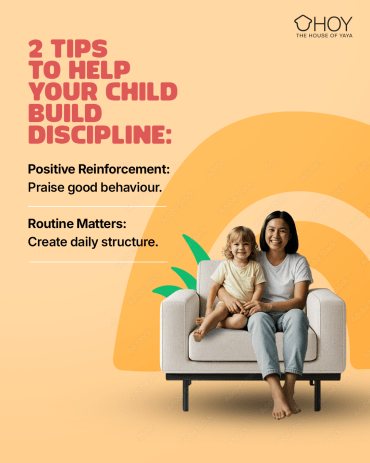
    Discipline isn’t about control. It’s about guidance. As parents, we want to raise kids who are not only kind and respectful, but also capable of managing their own choices. The good news? You don’t need complicated parenting systems or strict punishments to get there.

    Building discipline in children comes down to two simple things: positive reinforcement and consistent routines. In this blog, we’ll break down both tips and share how you can use them to make everyday parenting smoother, calmer, and more joyful.

    Why Discipline Matters

    Before we dive in, let’s talk about why discipline matters in child development. Discipline isn’t just about stopping tantrums or getting your child to brush their teeth. It’s about helping your child develop self-control, empathy, and the ability to make thoughtful choices.

    When done right, discipline becomes a life skill your child carries into friendships, school, and adulthood.

    Let’s explore two of the most powerful parenting tools for building discipline.

    1. Positive Reinforcement: Catch Them Being Good

    Positive reinforcement means encouraging and rewarding the behavior you want to see more of. It sounds simple, but it works like magic.

    Instead of focusing only on what your child is doing wrong, shift your attention to what they’re doing right. When your child shares a toy, says “please,” or finishes homework without a fight, praise them. These small moments are where real change begins.


    Why It Works


    Children naturally crave attention from parents. If they only get it when they misbehave, they may continue acting out just to stay on your radar. But when you recognize and celebrate good behavior, you reinforce the idea that positive actions bring connection, praise, and warmth.

    This doesn’t mean you need to throw a party every time your child picks up their plate. It just means noticing and saying things like:

    • “I saw how patient you were with your sister today. That was really kind.”
    • “Thank you for getting ready for bed on time. That helped everyone relax.”

    Consistency Is Key


    Praise should be sincere and specific. The more consistent you are, the more your child will begin to repeat those good behaviors because they feel seen and valued.

    2. Routine Matters: Create a Daily Structure

    Kids thrive on predictability. When they know what to expect next, they feel safe, confident, and more in control. That’s why building discipline often starts with something as simple as a daily routine.


    Why Routines Build Discipline


    Think of a routine as a soft structure. It gives your child clear expectations, which reduces power struggles. For example, if your child knows that screen time happens after homework, they’re less likely to argue or resist.

    A routine doesn’t have to be rigid. It just needs to be regular. Here’s how it helps:

    • Reduces decision fatigue: Fewer choices mean fewer chances for meltdowns.
    • Builds responsibility: Your child begins to own their part in the day (brushing teeth, packing their bag, tidying up).
    • Creates emotional security: Kids feel grounded when they know what’s next.

    How to Start a Simple Routine


    Start with just two or three anchor points in your child’s day:

    1. Morning routine: Wake-up, breakfast, get dressed
    2. After school: Snack, homework, play
    3. Bedtime: Bath, story, lights out

    Make it visual if needed. A chart with pictures can be a fun and empowering tool for younger kids. Let your child take part in building the routine. Giving them some choice creates buy-in.

    Discipline Without Yelling or Guilt

    When we talk about building discipline, many parents worry they’ll need to be “tough” or cold. But discipline doesn’t have to mean punishment. In fact, the most effective discipline is gentle, clear, and consistent.

    By focusing on what’s going well and providing a simple structure, you’re already teaching your child:

    • That their good behavior matters
    • That routines create peace and freedom
    • That they have control over their choices

    These are lessons that last a lifetime.

    Final Thoughts: Progress, Not Perfection

    There will still be messy days. Routines will be skipped, praise will be forgotten, and tempers will flare. That’s okay. Discipline is not about perfection. It’s about progress.

    The next time your child shares, cooperates, or shows kindness, pause. Acknowledge it. Let them know you see them. And the next time chaos takes over, remember it’s never too late to reset the tone.

    Small steps, taken consistently, lead to big changes. You’re not just shaping behavior. You’re shaping character. And that’s the heart of parenting.


    Looking for Extra Support?


    At House of YAYA, we understand that parenting is a full-time role. Our trusted nannies are more than childcare providers, they’re partners in your child’s development. We support families with trained professionals who value structure, empathy, and everyday learning.

    Whether you need full-time help or just a break to reset your own routine, we’re here to help.

    House of YAYA,  Childcare, upgraded.